From Burnout to Brilliance: Reading the Signs Before the System Crashes
Burnout doesn’t arrive overnight — it creeps in quietly, often hiding in plain sight until one day it stops you in your tracks. Most women I work with don’t even realise they’re burning out; they just think they’ve lost their focus, their spark, or their motivation — and with that, their confidence often begins to slip too. But burnout isn’t failure; it’s feedback. It’s the body and mind’s way of saying, “Something has to change.” It’s a symptom of prolonged stress, self-neglect, and misalignment — and if nothing changes, it will keep on burning until a full stop is forced. The good news is, it’s entirely recoverable once you start paying attention.
Stage 1: The Illusion of Functioning
In the early stages, you’re still getting things done, still showing up, still smiling (mostly!). From the outside, everything looks fine. But inside, you begin to notice a quiet sense of depletion — a low hum of anxiety, fatigue, or frustration that won’t quite shift. You might find yourself overthinking small things, feeling irritable for no reason, or needing to put in more effort just to feel “on top of it.” This is the phase most women stay in the longest, convincing themselves they’re just tired, that it’ll pass and that ‘things will be better when’… fill in the blank!
Stage 2: The Unravelling
Your body begins to keep score. Sleep becomes unreliable, your focus drifts, and you start withdrawing — emotionally or socially. You may find yourself turning to food, alcohol, or other numbing habits to soothe an overworked nervous system. Even small setbacks can start to feel overwhelming. These are the red flags your body raises when it’s been ignored for too long.
For many women in midlife, this phase becomes especially complex. The symptoms of burnout often overlap with those of perimenopause and menopause — disrupted sleep, brain fog, mood shifts, fatigue, loss of motivation. Too often, they’re brushed off by employers, colleagues, or even by ourselves as “just hormones.”
In response, we do what we’ve always done — we push through. Secretly we are terrified that we are going to look like a failure. So we work harder, strive more, prove our worth all over again. And somewhere in that relentless proving, many women start to feel undervalued, overlooked, even invisible — both at work and in life. But that misses the point entirely. What your body is really trying to tell you is that something in your outer world — your pace, boundaries, workload, or environment — needs to change, not just something within you.
Phase 3: The Flatline
This is the point where everything stops working — including you. You don’t just feel tired; you stop functioning. You can’t think clearly, can’t make decisions, can’t care about the things you know you should. Your brain feels like sludge, your body like lead. You wake up already defeated, running on fumes and guilt. Even the simplest task — replying to a message, cooking dinner, showing up — feels monumental.
You find yourself crying at random moments or staring at nothing, wondering how you got here. You can’t find your words, your patience, or your purpose. And the worst part? You still try to keep going — because you’ve been conditioned to. You keep performing “fine” while everything inside you screams that you’re not.
This is the edge. It’s what happens when stress, duty, and self-neglect are allowed to run unchecked. It’s not dramatic — it’s devastatingly quiet. And if you don’t intervene, it doesn’t just go away. It might ease for a while, but it always comes back, harder and faster each time, until something breaks that can’t be easily fixed.
The truth is, you don’t come back from this stage the same person — and the consequences can be catastrophic. Relationships fracture. Careers derail. Health declines. And for some, the cost is even higher. Burnout can quite literally steal your life if it goes unchecked.
Burnout is preventable, and it’s completely recoverable once you start paying attention. The moment you stop dismissing the signs — the exhaustion, the irritability, the loss of joy — and start acknowledging that something deeper needs to shift, you create the opening for change. You don’t have to face that process alone. In fact, trying to fix burnout from inside the same mindset that created it rarely works.
And crucially, recovery begins with taking full responsibility — not blame. It’s easy to point to the bad boss, the insensitive partner, the impossible workload. But those are symptoms, not causes. Burnout is a mirror reflecting where your boundaries, beliefs, and behaviours have been out of alignment for too long. The moment you stop waiting for the world to change and recognise that you have the power to rewrite the rules, everything starts to shift.
Here are three truths that can help you begin the process of recovery and realignment:
-
You can’t see what you’re too close to.
When you’ve been running on empty for too long, it’s almost impossible to see the patterns keeping you there. That’s where mentorship or coaching becomes powerful — not because someone else has the answers, but because they help you see what you can’t yet see, and hold the space for you to find your own clarity and courage.
-
You’re not supposed to carry it all.
Burnout thrives in self-reliance — in the belief that asking for help is a weakness or an admission of failure. Real strength is choosing to support yourself by allowing others in. It’s paradoxical — the moment you finally reach out is often the very point things begin to shift. Yet it’s also the hardest step to take. But when you do, you create space for recovery, connection, and perspective.
-
Burnout isn't inevitable
You don’t have to hit the wall to wake up. The real power lies in noticing the signs early — the exhaustion, the loss of joy, the growing sense that something’s off — and choosing to respond differently from now on. It takes recognition, giving yourself space to create a new path and prioritising yourself without guilt or apology.
If you have already hit the wall — and I speak entirely from experience here - there is hope. You can recover fully. You can rebuild, reimagine, and return stronger, calmer, and more connected to yourself than ever before.
Burnout doesn’t define you; it redirects you. It’s the signal that it’s time to stop surviving and start designing your life on your own terms.
On My Bookshelf...
When the Body Says No by Dr Gabor Maté
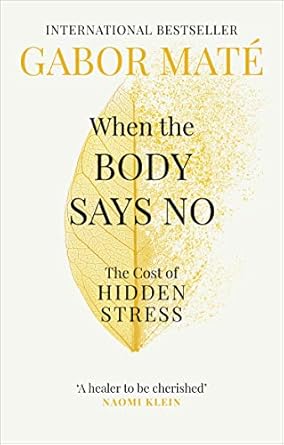
This isn’t a comfortable read — but then, neither is burnout. Maté has a remarkable way of revealing how the stress we suppress, the emotions we silence, and the boundaries we ignore eventually speak through the body. It’s not light, but it’s illuminating.
Even a few chapters in, the insights are powerful. What struck me most is the idea that our bodies aren’t betraying us when they break down; they’re protecting us, forcing us to stop when our minds refuse to let us.
If this month’s theme has resonated — if you’ve felt the tension between holding it all together and hearing the whisper that something needs to change — this book will help you see that connection with clarity and compassion.
Recalibration Sessions — from burnout to balance
If you’ve been running on empty, feeling stretched too thin, noticing the early signs of burnout creeping in or if you are deeper into the burnout cycle that you thought, my 90-minute Recalibration Session is designed to help you step out of survival mode and reconnect with the part of you that already knows what’s next.
Together, we’ll get clear on what’s draining your energy, what your next chapter is asking of you, and what needs to shift so you can move forward with calm confidence and renewed purpose.
And if you’re a teacher or leader who’s just gone back after half term, still exhausted and quietly wondering how much longer you can keep doing this — this session was made for you. You don’t have to wait until you hit breaking point to make a change. This is your chance to press pause, recalibrate, and start shaping a life that feels aligned, spacious, and entirely your own. You’ll leave feeling grounded, re-energised, and ready to move forward — not by pushing harder, but by moving in alignment with who you really are. Book your 90-minute Recalibration Session here for just £97.
Book Your Recalibration Session Here
And if you haven’t already, don’t forget to join The Soul Sirens Circle — our private Facebook community where this month’s conversation continues. It’s a safe, inspiring space to share insights, find support, and connect with other women who are also designing life on their own terms. Click here to register your interest and receive your invitation. I can't wait to see you there!
Let’s Stay Connected
I’d love to stay connected with you! Follow me on Facebook, LinkedIn, and Instagram or head over to my You Tube Channel to keep up with updates, insights, and inspiration for your journey.
Final Thoughts
Burnout doesn’t happen because you’re weak or you have failed — it happens because you’ve been strong for too long in the wrong way. Whether you’re standing at the edge or already over it, always remember that you have a choice. You can keep pushing, or you can choose you, and start designing a life that truly supports your growth, fulfilment and happiness. Change begins the second you decide enough is enough.
Please share this newsletter with whoever you think would benefit and they can sign up below to receive future newletters.